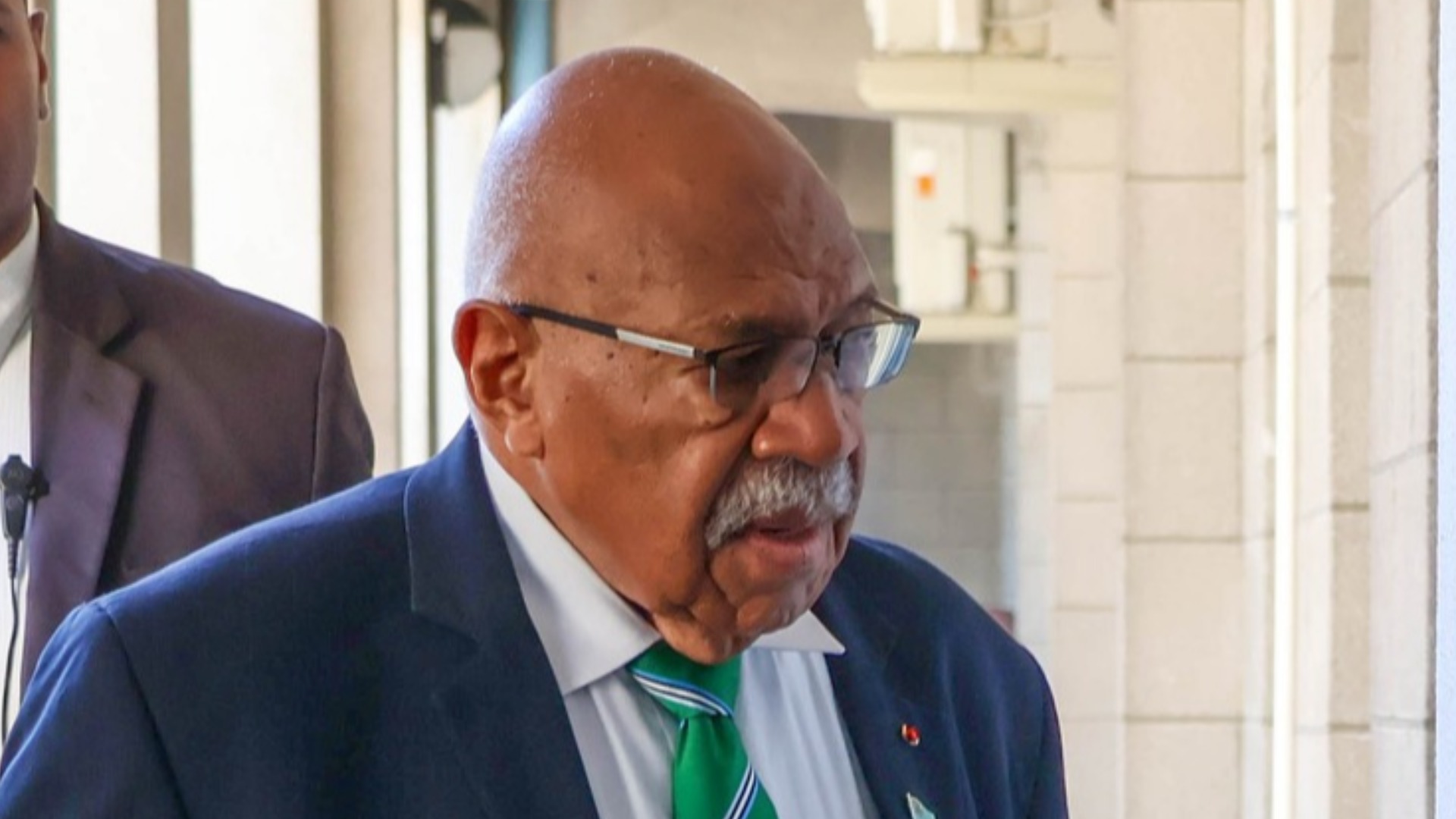
Prime Minister Sitiveni Rabuka confirms that a five-year National Strategic Human Resource Plan is being formulated to address youth unemployment, which will align human capital development with national priorities and labour market realities.
While responding to the President's opening address, Rabuka says with a youthful labour force comprising nearly 70 percent of young Fijians, we hold enormous demographic potential but youth unemployment, outward migration of skilled workers, and productivity challenges require decisive action.
Rabuka says it will emphasize workforce planning, data-driven forecasting, collaboration between government, industry and training institutions, and measurable performance indicators.
The Prime Minister says it will be inclusive, gender responsive, climate aware, and grounded in good governance principles.
Rabuka emphasises that human capital development is the most strategic investment in our democracy and long-term prosperity and adds that a skilled, adaptable, and future-ready workforce strengthens economic competitiveness, social cohesion, and national resilience.
He says to modernize the way we work, by the end of this year, flexible working hours will be formally introduced across the civil service, improving productivity and work-life balance.
He confirms strategic workforce plans will be developed for the civil service as a whole which will ensure the right skills are in place to meet national priorities today and into the future.
Rabuka further says by 30th September 2026, all Permanent Secretaries will be subject to a stringent performance evaluation where each Permanent Secretary will sign a performance agreement.
He says evaluation will ensure alignment with national priorities, measurable outcomes, transparent review processes, and improved service delivery.
INSERT: Rabuka on PS 9 mar
He also adds that a comprehensive functional review of the civil service is being undertaken through a phased approach involving the Office of the Prime Minister, the Ministry of Finance, the Ministry of Strategic Planning, National Planning and National Development and Statistics, the Ministry of the Civil Service, and the Ministry of Rural and Maritime Development and Disaster Management.
He says the inclusion of rural development reflects government's intention to introduce a modern rural development system responsive to communities, economically enabling, and adapts to changing climate and market realities.
He adds sustaining our national development ambitions requires a tough change in our economic performance and to move Fiji from a low-income nation to a high-income nation status requires the lifting of national growth target to 6 percent annually by 2050, from the 3.5 we are at.
Rabuka says achieving this higher growth pathway will provide a renewed impetus to our development plans, expand employment opportunities, and strengthen the fiscal space needed to invest in infrastructure, social services, and climate resilience.
He says to realize these ambitions, the government will pursue a coordinated strategy focused on productivity-led growth, targeted investment in key sectors such as tourism, agriculture, fisheries, manufacturing, and the digital economy, improved ease of doing businesses, and stronger public-private partnerships.
The Prime Minister says through disciplined policy implementation and whole-of-government coordination, they are confident that Fiji can accelerate growth in a way that is inclusive, sustainable, and resilient, delivering tangible benefits for all citizens.
He says we are moving in the right direction, but we need to do more and all our work from here forward is towards that goal.
The Prime Minister says the government has earmarked the Millennium Challenge Cooperation grants by the United States for transformational investments and megaprojects aimed at strengthening Fiji's economic structure over the long term, including infrastructure and strategic development priorities that will enhance productivity, resilience, and inclusive growth.
Rabuka also says that in line with the recommendations from the World Bank, the government is progressing reforms to improve the ease of doing business in Fiji, to boost foreign direct investment, and support private sector growth.
He says the agencies involved in the business approval process will, as a matter of priority and urgency, streamline this process to remove bottlenecks and duplication, and or put in place necessary components of the system to facilitate seamless and efficient clearance of business registration and start-ups.
The Prime Minister also says by September this year, the Fiji Learning Institute for Public Service will introduce AI-focused training programs to enhance data-driven decision-making, efficiency, and service delivery.
Rabuka stresses AI will support human judgment and ethical leadership.
The Prime Minister adds economic resilience and democratic governance are mutually reinforcing and the Government will continue fiscal prudence, strengthen revenue integrity, and ensure value for money.